University President Attends the Closing of the Second Day of the Third Technological Forum for Artificial Intelligence,
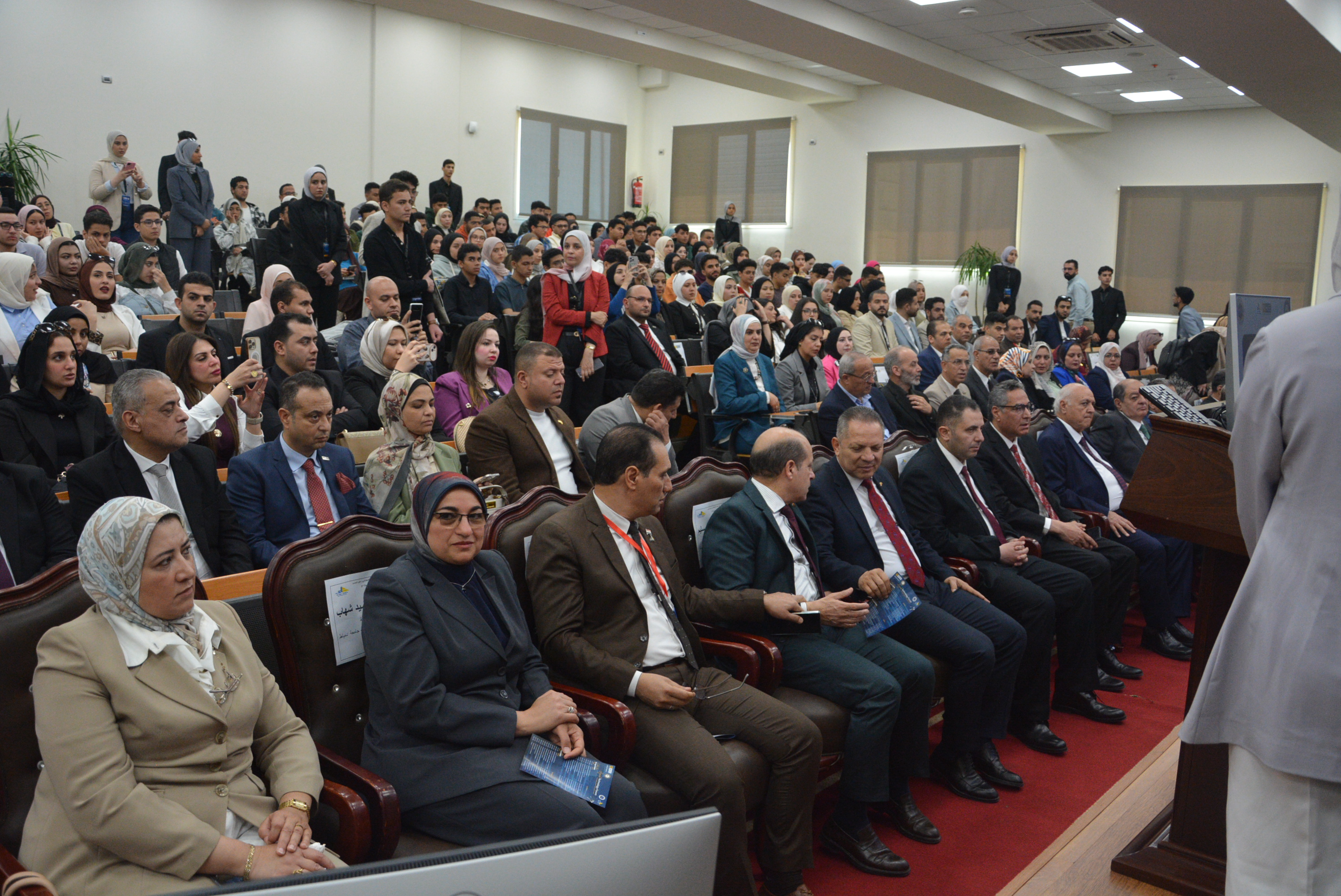
Prof. Dr. Hemdan Rabie Al-Metwally, President of Damietta University, attended on Thursday, April 23, 2026, the closing activities of the second day of the Third Technological Forum for Artificial Intelligence. The forum was organized by the Faculty of Computers and Artificial Intelligence at Damietta University in cooperation with the Faculty of Artificial Intelligence at Horus University. Damietta University hosted the first day’s events, while Horus University hosted the closing activities.
The event was attended by Prof. Dr. Hossam El-Din Fawzy, Governor of Damietta; Prof. Dr. El-Saeed Abdel Hady, President of Horus University; Prof. Dr. Hassan El-Shennawy, Vice Chairman of the Board of Trustees of Horus University; Prof. Dr. El-Metwally Mostafa Selim, Vice President of Damietta University for Community Service and Environmental Development; the vice presidents of Horus University; Prof. Dr. Wael Abdel Qader Awad, Dean of the Faculty of Computers and Artificial Intelligence at Damietta University; Prof. Dr. Hossam Mostafa, Dean of the Faculty of Artificial Intelligence at Horus University; Prof. Dr. Mahmoud Abdel Aty, Head of the National Committee for Artificial Intelligence Sciences; along with a number of faculty deans and vice deans.
The second day’s activities began at the conference hall of Horus University with the playing of the national anthem of the Arab Republic of Egypt, followed by a recitation of verses from the Holy Quran.
In his speech, Prof. Dr. Hossam Mostafa, Dean of the Faculty of Artificial Intelligence at Horus University, welcomed the attendees, emphasizing that the forum comes amid an unprecedented acceleration in artificial intelligence technologies, which have become a key driver of development. He noted that the cooperation between Damietta and Horus Universities represents a model of academic integration aimed at preparing graduates capable of competing locally and internationally.
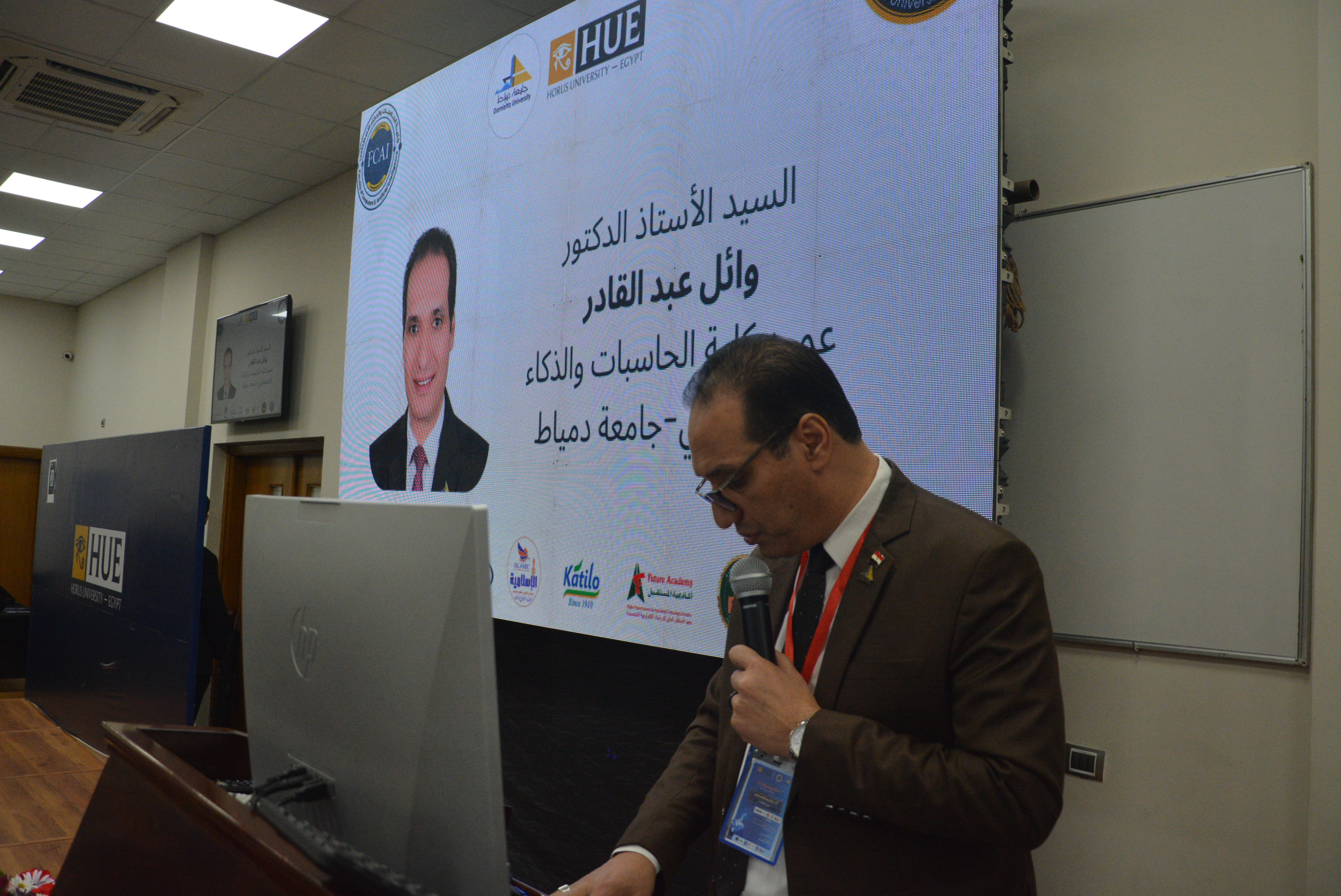
For his part, Prof. Dr. Wael Abdel Qader Awad, Dean of the Faculty of Computers and Artificial Intelligence at Damietta University, stated that the forum is an annual event aimed at strengthening communication between students and experts, and providing opportunities to explore the latest developments in technology and artificial intelligence through sessions and workshops delivered by leading specialized companies, praising the support of both university leaderships.
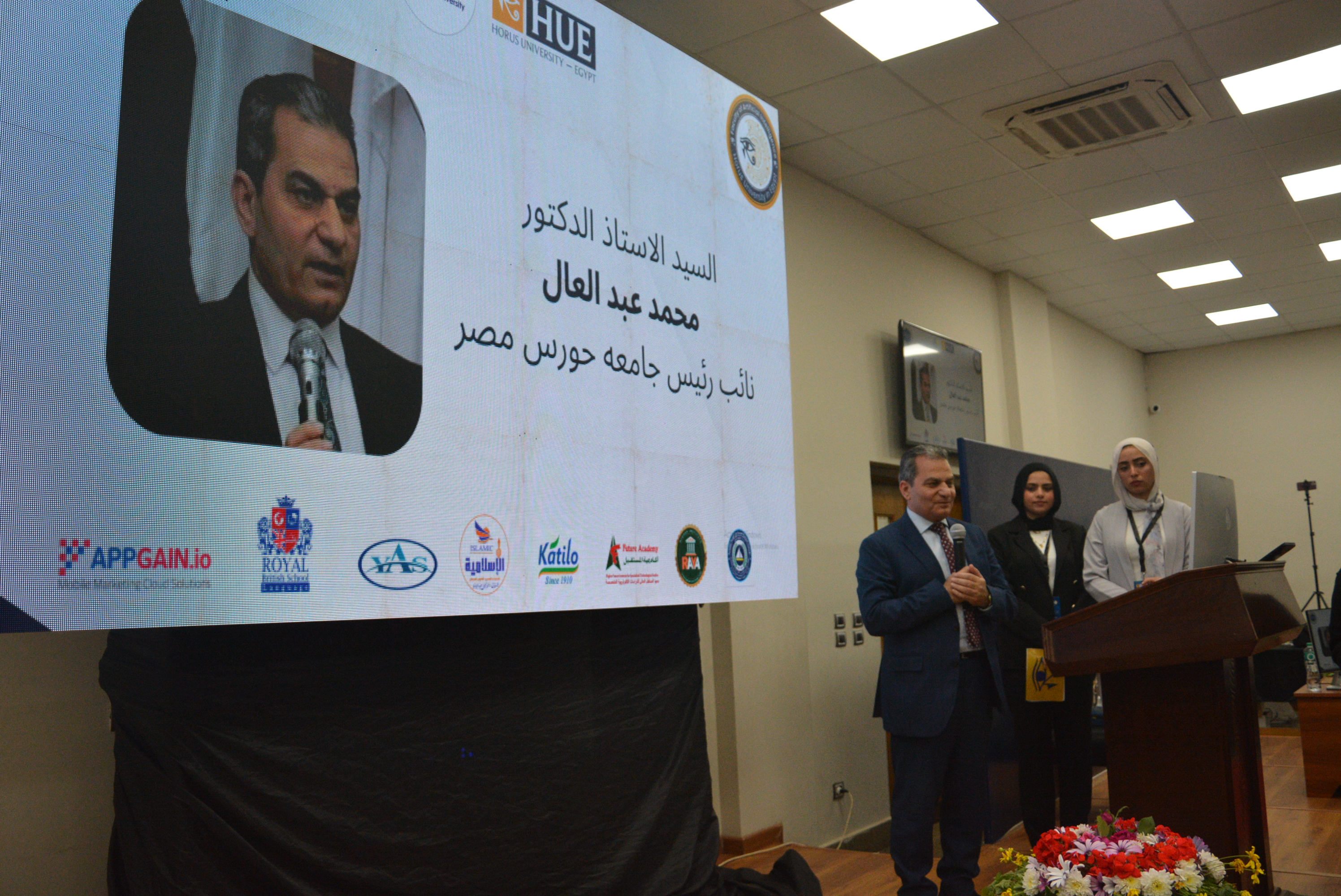
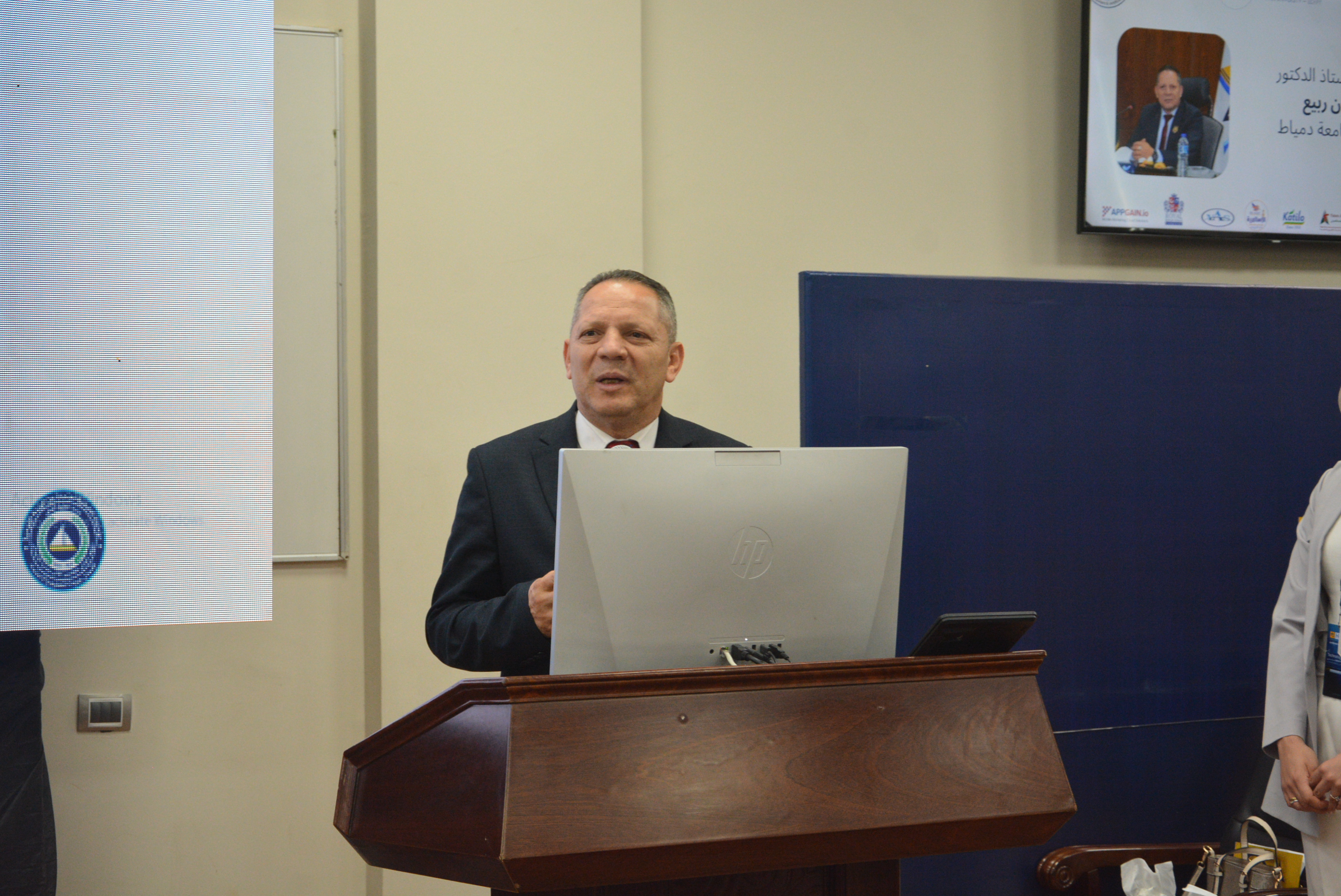
Meanwhile, Prof. Dr. Mohamed Abdel Aal, Vice President of Horus University for Community Service and Environmental Development, commended the continued cooperation between Damietta and Horus Universities for the third consecutive year, reflecting both sides’ commitment to achieving academic integration. In his speech, Prof. Dr. Hemdan Rabie Al-Metwally, President of Damietta University, expressed his happiness with the strong partnership with Horus University. He extended his greetings to the Governor of Damietta and the attendees, affirming that the state aims to prepare graduates in accordance with international standards. He also stressed the importance of transforming students’ projects into practical applications that serve the community and create job opportunities.
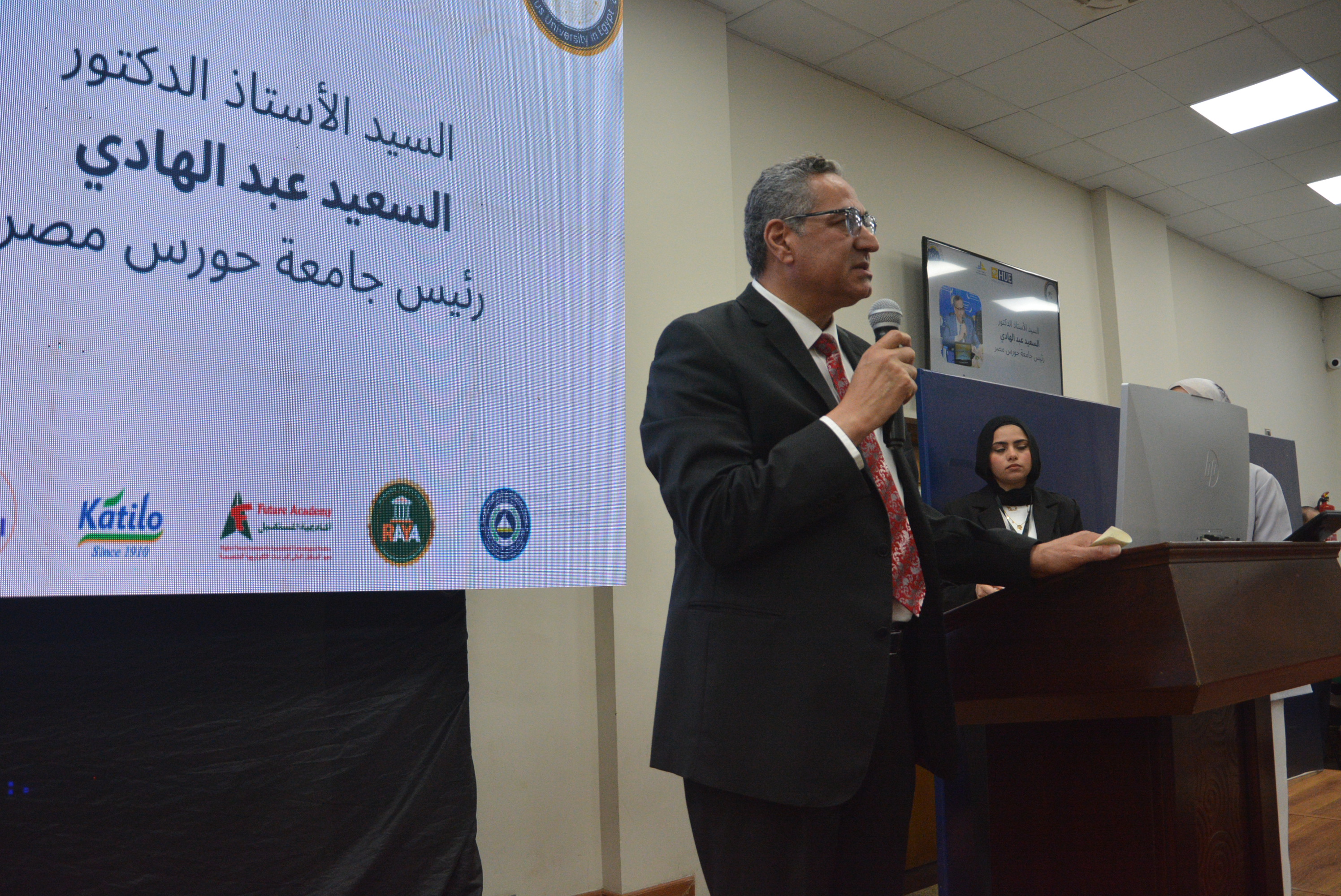
For his part, Prof. Dr. El-Saeed Abdel Hady, President of Horus University, emphasized the university’s commitment to building bridges of cooperation with various universities, highlighting the importance of artificial intelligence as one of the pillars of the modern industrial revolution and its role across different sectors.
Meanwhile, Prof. Dr. Hassan El-Shennawy conveyed the greetings of Prof. Dr. Ibrahim Saber, Chairman of the Board of Trustees of Horus University, praising the fruitful cooperation with Damietta University and affirming that artificial intelligence has become an essential element in various fields of life, including disease prediction and early diagnosis.
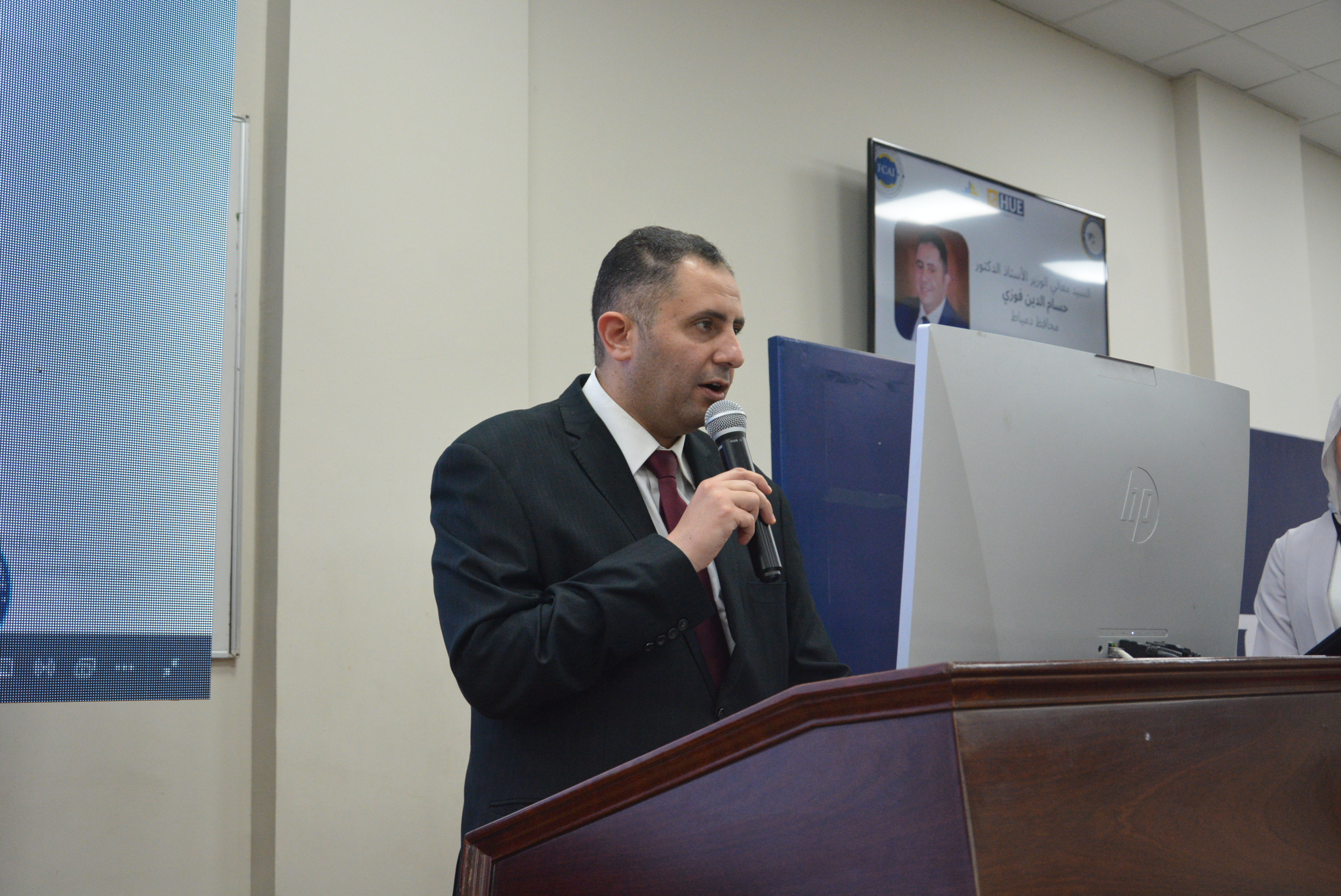
In turn, Prof. Dr. Hossam El-Din Fawzy, Governor of Damietta, expressed his pleasure at visiting Horus University, commending the forum as a reflection of the efforts of both universities in developing students’ skills and preparing them for the labor market. He also affirmed the governorate’s support for all initiatives aligned with the state’s direction toward digital transformation.
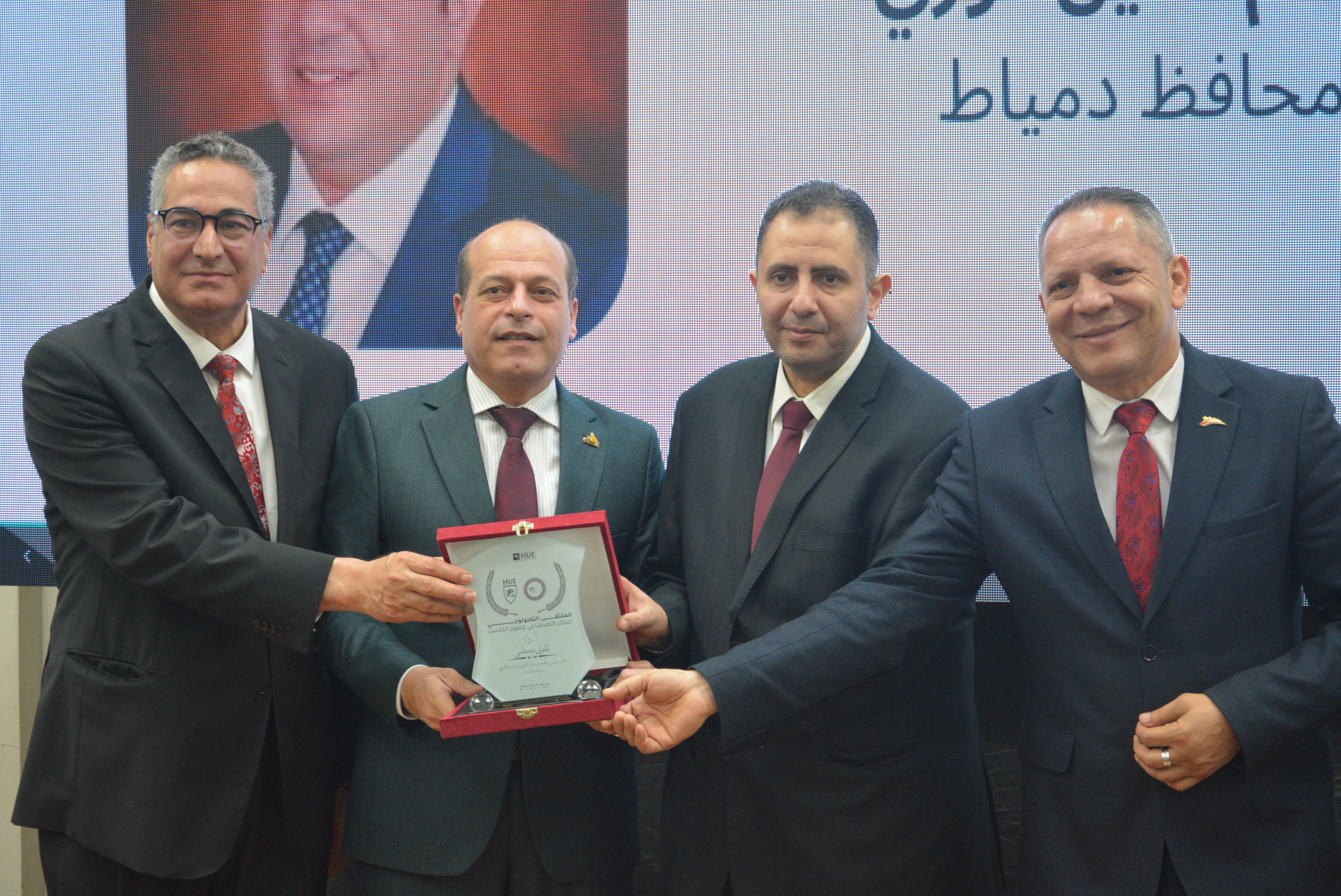
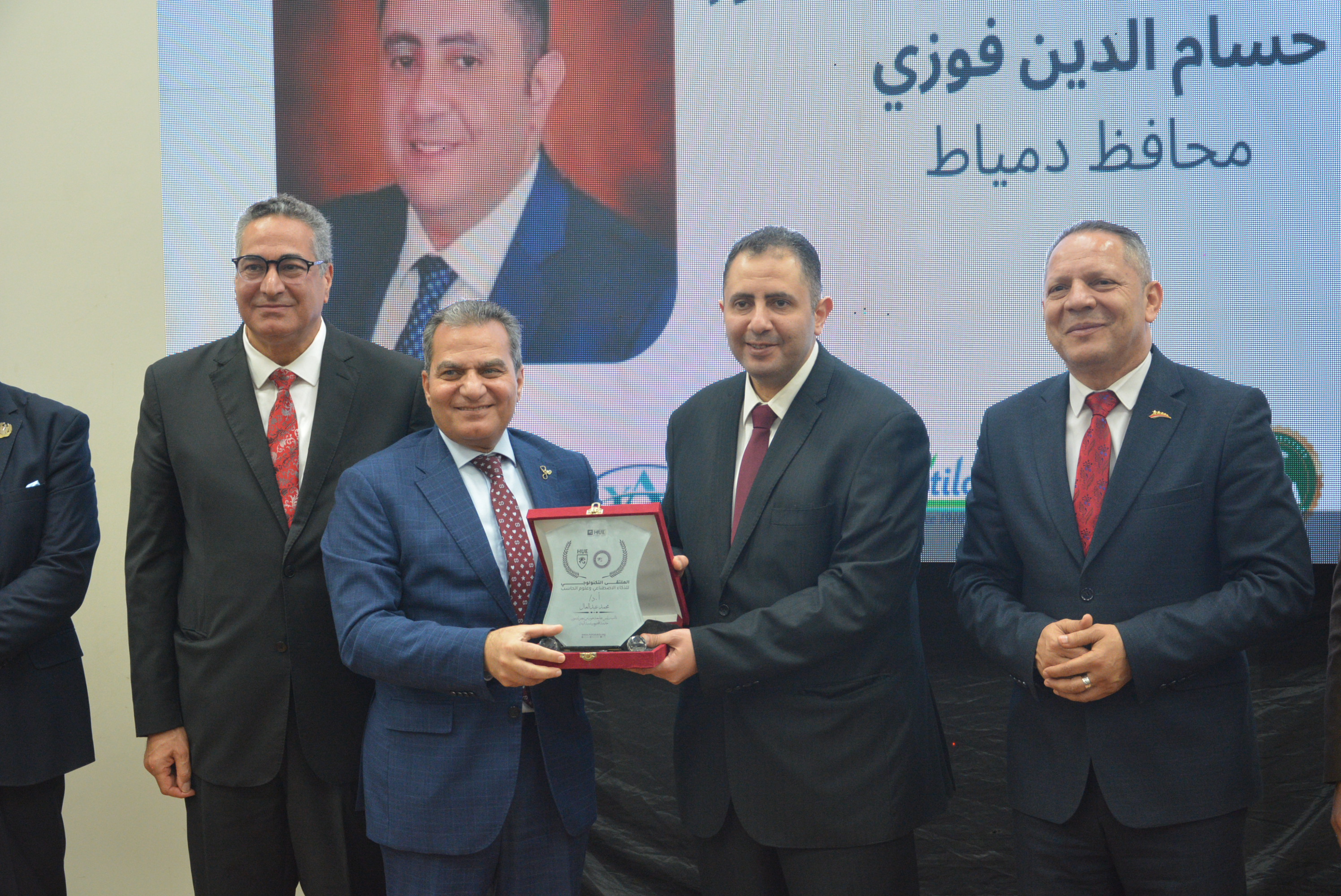
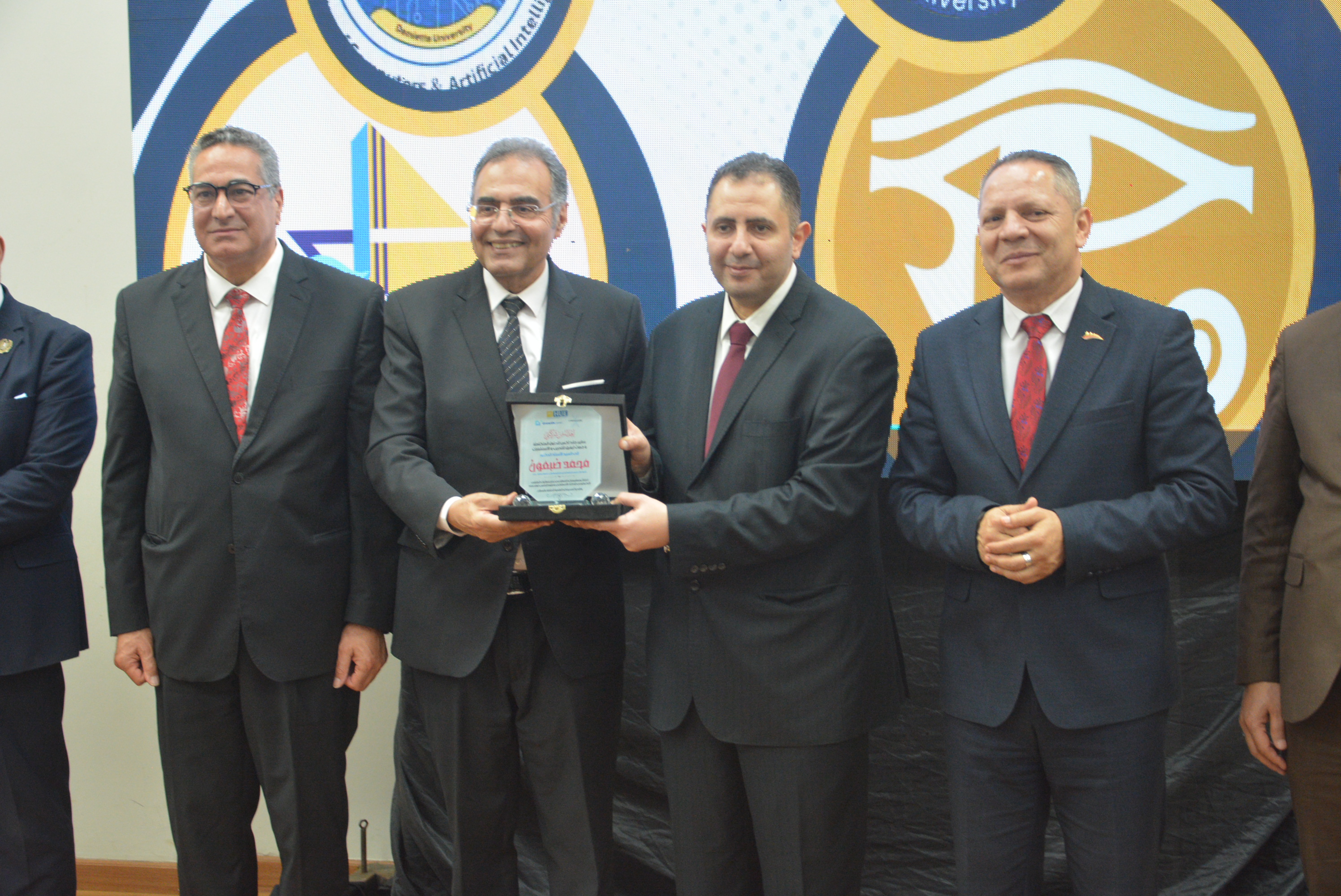
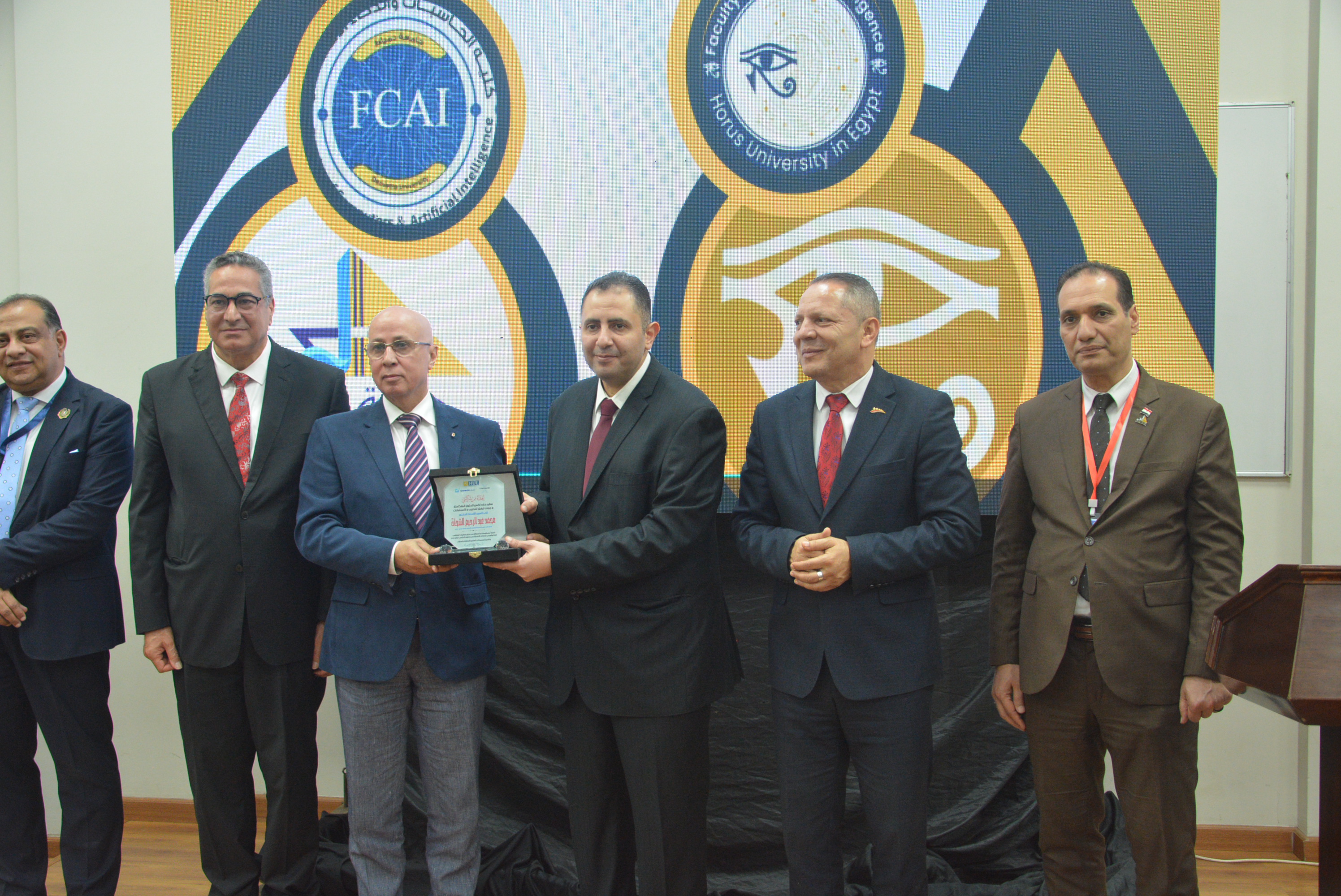
The event also witnessed the presentation of honorary shields to the leadership of Damietta and Horus Universities, as well as the Governor of Damietta, in appreciation of their efforts in the success of the forum.
The forum concluded with the announcement of a number of important recommendations, most notably:
First: Education and Learning
Regularly update and develop curricula to keep pace with rapid advancements in artificial intelligence and data science.
Promote applied learning by increasing practical courses and projects based on solving real-world problems.
Integrate AI tools and technologies into the educational process to enhance the quality of teaching and assessment.
Support academic cooperation between the two universities through the exchange of courses and educational expertise.
Second: Students
Encourage students to innovate and engage in entrepreneurship in AI fields through incubators and business accelerators.
Organize joint scientific competitions and hackathons between universities to discover and nurture talent.
Provide specialized training programs in collaboration with industry to prepare students for the labor market.
Support student activities related to technology and digital transformation.
Third: Postgraduate Studies and Scientific Research
Promote applied scientific research in AI fields that serve national development priorities.
Establish joint postgraduate programs among participating universities.
Support international scientific publishing and participation in specialized conferences.
Encourage interdisciplinary research linking AI with various fields (such as medicine, agriculture, and engineering).
Develop innovation labs and research centers specializing in artificial intelligence to support advanced studies and practical applications.
Fourth: Community Service and Environmental Development
Employ AI technologies to address local community challenges such as healthcare, industry, and transportation.
Provide training programs and workshops to spread digital awareness among different segments of society.
Build effective partnerships with governmental and industrial institutions to support digital transformation.
Contribute to preparing qualified cadres capable of leading digital transformation projects at the national level.














 English
  عربي
عربي Française
 Español